
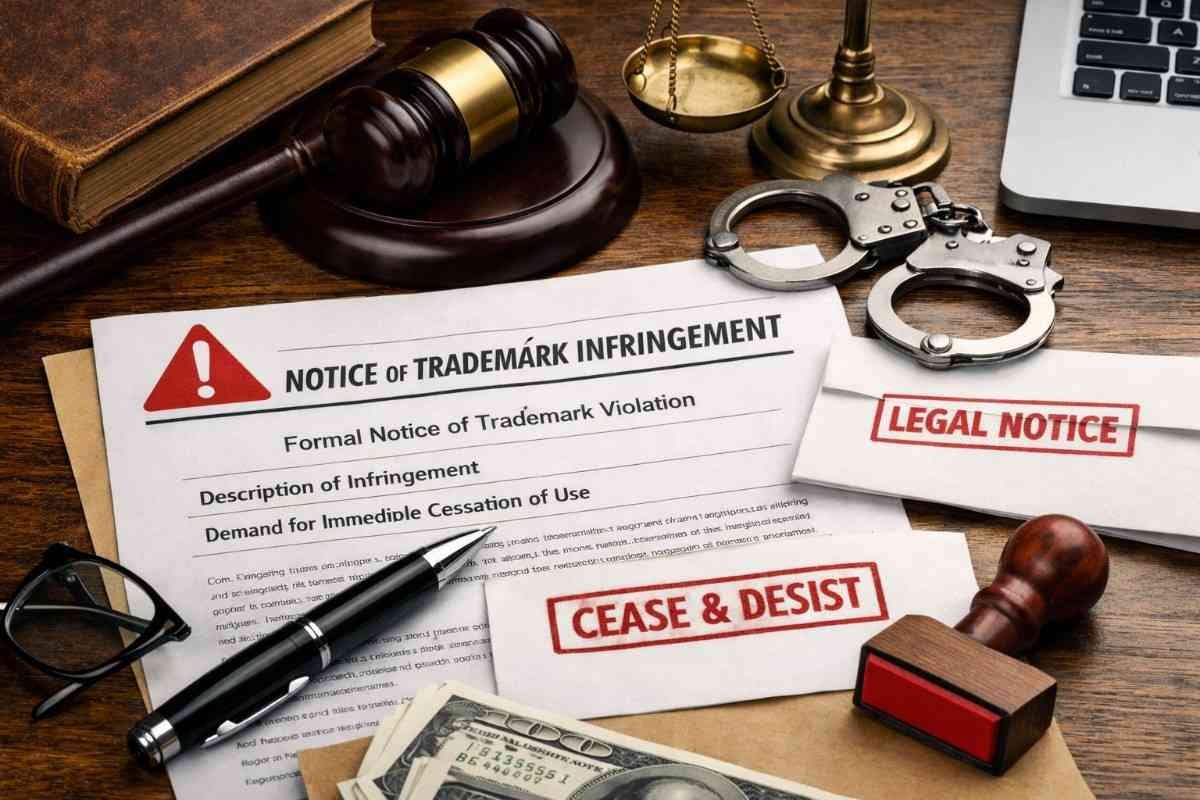
Trademark Infringement Notice
Trademark Infringement Notice
Trademark infringement occurs when a person, business, or organization uses a registered trademark or a deceptively similar mark without authorization. Such unauthorized use can create confusion among consumers regarding the source, origin, or ownership of goods and services.
A trademark may include:
- Brand names
- Logos
- Symbols
- Slogans
- Product names
- Business identifiers
If another party unlawfully uses a mark that affects your brand identity or reputation, legal action may be required to stop the misuse.
Types of Trademark Infringement
Trademark infringement generally falls into two categories.
Direct Trademark Infringement
Direct infringement occurs when a registered trademark is used without the owner's consent. Common situations include:
Using an identical trademark for similar products or services
Adopting a confusingly similar logo or brand name
Selling products under a mark that resembles a registered trademark
Creating customer confusion regarding business ownership
For direct infringement claims, the trademark must usually be registered under the Trade Marks Act, 1999.
Indirect Trademark Infringement
Indirect infringement applies when a person or entity contributes to or benefits from trademark misuse.
Vicarious Infringement
A person may be held liable if they have authority over the infringing activity and knowingly allow it to continue.
Contributory Infringement
This occurs when a party knowingly assists, supports, or facilitates another person's infringement activities.
Grounds for Sending a Trademark Infringement Notice
A trademark infringement notice can be issued when:
Use of an Identical Trademark
An unauthorized party uses the exact registered trademark for identical products or services.
Likelihood of Consumer Confusion
A similar mark is being used in a way that causes customers to believe there is a connection between the two businesses.
Exploitation of Brand Reputation
A third party attempts to gain unfair benefits from the reputation and goodwill associated with a well-known trademark.
Unauthorized Use on Packaging or Labels
The registered trademark is reproduced on product packaging, labels, promotional materials, or product displays without permission.
Misleading Advertising Practices
The trademark is used in advertisements or marketing campaigns to attract customers unfairly or create false associations.
Situations Where Trademark Infringement May Not Apply
The Trade Marks Act also provides certain exceptions where trademark use does not amount to infringement.
These include:
Descriptive Use
Using a trademark solely to describe the characteristics, quality, purpose, or nature of goods and services.
Use Within Registration Limits
Where the trademark registration itself contains specific restrictions and the usage remains within those limitations.
Authorized Usage
Use by the trademark owner or an officially registered user is not considered infringement.
Necessary Product References
When the trademark is used reasonably to indicate compatibility, adaptation, or association with another product.
Use of Registered Rights
A registered trademark owner may lawfully use a trademark even if similarities exist with another registered mark under applicable legal rights.
Why Send a Trademark Infringement Notice?
Sending a legal notice is often the fastest and most effective way to address trademark violations before filing a lawsuit.
Benefits include:
Protecting brand reputation
Preventing customer confusion
Creating legal evidence of enforcement efforts
Encouraging settlement without litigation
Demonstrating ownership rights over the trademark
Many disputes are resolved after the infringing party receives a professionally drafted notice.
When Should You Send a Trademark Infringement Notice?
You should consider issuing a notice when:
Someone uses your trademark without permission
A competing business adopts a similar brand identity
Consumers begin confusing another brand with yours
The mark appears on websites, advertisements, or product packaging
A substantial portion of your trademark has been copied
Taking prompt action can prevent further damage to your business and strengthen your legal position.
Information Required in a Trademark Infringement Notice
A properly drafted notice should include:
Details of the Trademark Owner
Name of the trademark owner
Address and contact details
Ownership information
Details of the Infringing Party
Name of the individual or business
Address and available contact information
Trademark Registration Information
Trademark name
Registration number
Registration date
Protected goods or services
Description of the Infringement
Details of the infringing mark
Explanation of similarities
Nature of unauthorized use
Evidence Supporting the Claim
Evidence may include:
Website screenshots
Product photographs
Packaging samples
Advertising materials
Promotional content
Demand to Stop Usage
The notice should clearly instruct the infringer to:
Stop using the trademark immediately
Remove infringing materials
Cease advertising activities involving the mark
Compliance Deadline
A reasonable response period is generally provided to allow corrective action.
Legal Consequences
The notice should state that legal proceedings may be initiated if the infringement continues.
Steps for Drafting a Trademark Infringement Notice
A professionally drafted notice generally follows this structure:
Step 1: Introduction
State the purpose of the notice and explain the infringement issue.
Step 2: Identification of Parties
Provide complete details of both the trademark owner and the alleged infringer.
Step 3: Trademark Details
Mention trademark registration information and ownership rights.
Step 4: Description of Infringement
Explain how the infringing mark violates trademark rights.
Step 5: Demand for Immediate Action
Clearly outline the actions required from the infringing party.
Step 6: Response Timeline
Specify a reasonable period for compliance.
Step 7: Warning of Legal Proceedings
Inform the recipient that legal remedies may be pursued if corrective action is not taken.
Step 8: Closing Statement
Reaffirm ownership rights and the intention to protect the trademark against unauthorized use.
Trademark Infringement Notice Services by TaxAbide
At TaxAbide, we help businesses protect their valuable trademarks through professional legal support and effective enforcement strategies.
Legal Assessment
We evaluate the infringement and determine the strength of your claim.
Drafting of Trademark Notices
Our legal experts prepare detailed and legally sound infringement notices tailored to your case.
Review of Supporting Evidence
We examine available evidence and incorporate relevant facts into the notice.
Notice Delivery
The notice can be issued through appropriate legal communication channels to ensure proper documentation and recordkeeping.
Ongoing Legal Support
If the matter remains unresolved, we can guide you through the next legal steps available under Indian trademark law.
Why Choose TaxAbide?
Experienced legal professionals
Accurate and legally compliant documentation
Timely assistance and guidance
End-to-end trademark protection support
Transparent and professional service
Protecting your trademark today can save your business from significant losses tomorrow. TaxAbide helps you take prompt and effective action against trademark infringement and safeguard the identity of your brand.