

Provident Fund Registration
Provident Fund Registration
PF Registration, also known as EPF Registration, is a statutory requirement for eligible employers under the Employees' Provident Fund and Miscellaneous Provisions Act, 1952. The scheme helps employees build long-term financial security through regular contributions made by both the employer and employee. It is one of India's most important employee welfare and social security programs.
At TaxAbide, we assist businesses across India with PF registration, EPFO compliance, monthly filings, and labour law support to ensure smooth and hassle-free compliance.
The Employees' Provident Fund Organisation (EPFO), operating under the Ministry of Labour and Employment, administers the EPF scheme and manages social security benefits for millions of workers throughout India.
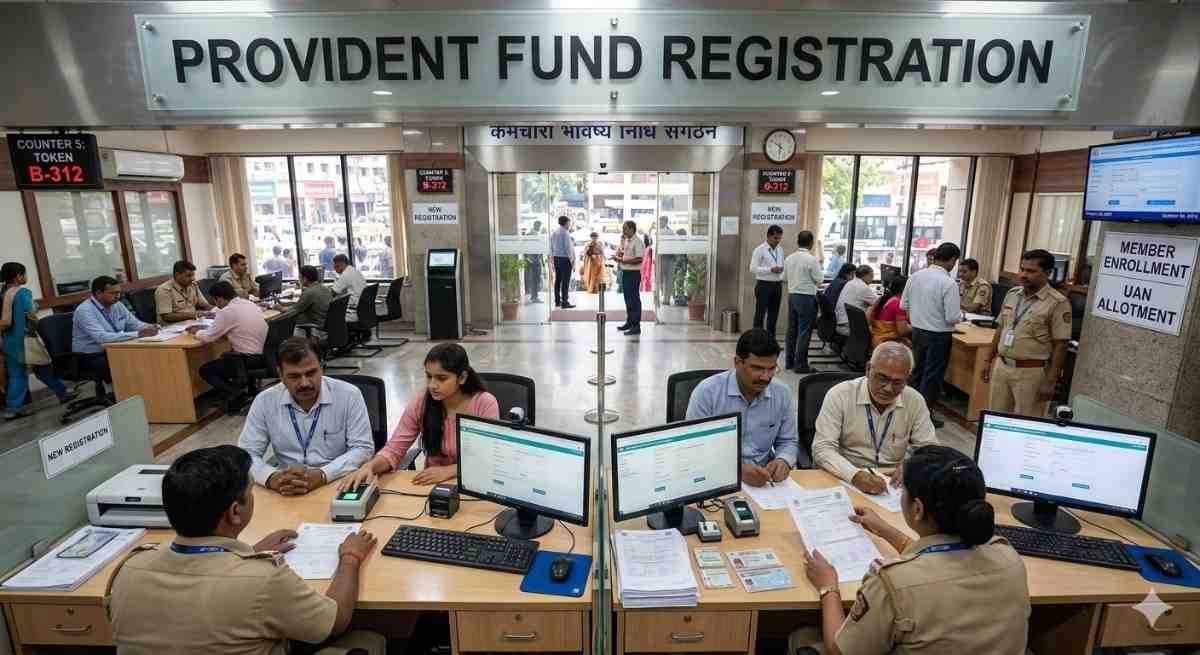
Key Components of the EPF Scheme
The EPF system consists of three major schemes:
Employees' Provident Fund (EPF)
Both employer and employee contribute 12 percent of the employee's basic salary and dearness allowance every month to build retirement savings.
Employees' Pension Scheme (EPS)
A portion of the employer's contribution is allocated to the pension scheme, providing pension benefits after retirement.
Employees' Deposit Linked Insurance Scheme (EDLI)
This insurance scheme offers life insurance coverage to EPF members and is funded solely by the employer.
Why is PF Registration Mandatory?
Under the EPF Act, establishments employing 20 or more employees must register with the EPFO.
The law requires employers to deduct, contribute, and deposit provident fund contributions regularly.
Failure to register can result in penalties, legal action, interest liabilities, and prosecution.
Consequences of Non-Compliance
Businesses that fail to register with EPFO may face:
Monetary penalties for non-registration
Interest on unpaid contributions
Damages on delayed payments
Legal proceedings initiated by EPFO
Recovery of outstanding dues
Loss of employee trust and business reputation
Purpose of PF Registration
The primary objective of PF registration is to provide financial stability to employees and their dependents.
The accumulated fund helps employees meet retirement needs while also offering support during emergencies such as illness, housing requirements, education expenses, or family obligations.
For employers, PF registration demonstrates compliance with labour laws and commitment toward employee welfare.
Types of PF Registration
Mandatory Registration
Any establishment employing 20 or more employees is required to register with EPFO within the prescribed period.
Voluntary Registration
Organizations with fewer than 20 employees may voluntarily opt for PF registration and provide social security benefits to their workforce.
Exempted Establishments
Certain organizations operating approved provident fund schemes with benefits equal to or better than EPF may receive exemption subject to EPFO approval.
Benefits of PF Registration
Benefits for Employees
Long-term retirement savings
Monthly pension benefits after retirement
Life insurance protection under EDLI
Partial withdrawal facilities during emergencies
Tax savings under applicable income tax provisions
Easy transferability through UAN
Interest earnings on accumulated balance
Benefits for Employers
Compliance with statutory requirements
Improved employee satisfaction and retention
Tax deduction on employer contributions
Enhanced employer brand value
Reduced employee disputes regarding social security benefits
Eligibility for PF Registration
The following establishments are generally required or eligible to register:
Businesses employing 20 or more workers
Factories and manufacturing units covered under the EPF Act
Organizations notified by the Central Government
Voluntary applicants employing fewer than 20 employees
Cooperative societies meeting prescribed criteria
Commercial establishments covered under labour regulations
Difference Between EPF, ESI, and Gratuity
| Particulars | EPF | ESI | Gratuity |
|---|---|---|---|
| Governing Law | EPF Act, 1952 | ESI Act, 1948 | Gratuity Act, 1972 |
| Applicability | 20+ Employees | 10+ Employees | 10+ Employees |
| Main Benefit | Retirement Savings | Medical Benefits | Separation Benefit |
| Employee Contribution | Applicable | Applicable | Not Applicable |
| Employer Contribution | Applicable | Applicable | Applicable as per law |
| Administered By | EPFO | ESIC | Labour Authorities |
Businesses often require both EPF and ESI registration depending on employee strength and salary structure.
Documents Required for PF Registration
Private Limited Company
Certificate of Incorporation
PAN Card
MOA and AOA
GST Registration Certificate
Director Details
Cancelled Cheque
DSC of Authorized Signatory
LLP
LLP Incorporation Certificate
LLP Agreement
PAN Card
GST Certificate
Designated Partner Details
Cancelled Cheque
Documents Required for PF Registration
Partnership Firm
Partnership Deed
PAN Card
GST Registration
Address Proof
Partner Details
Sole Proprietorship
PAN Card
GST Certificate
Shop and Establishment Registration
Identity and Address Proof
Bank Details
Additional Documents
Employee list
Salary records
Attendance records
Aadhaar and PAN details of employees
Bank account details
Authorized signatory information
How to Apply for PF Registration Online?
The entire EPF registration process is available online through the EPFO portal.
Step-by-Step Process
Visit the EPFO Unified Portal.
Select Establishment Registration.
Create a user account.
Register the Digital Signature Certificate.
Enter business details.
Add employee information.
Upload supporting documents.
Submit the application.
Verification by EPFO.
Receive PF Registration Number.
EPF Contribution Rates
Under the standard EPF structure:
Employee Contribution: 12% of Basic Salary and DA
Employer Contribution: 12% of Basic Salary and DA
The employer's contribution is further divided between EPF, EPS, and EDLI components according to EPFO guidelines.
PF Registration Process
The registration journey generally involves:
Checking eligibility
Collecting documents
Obtaining DSC
Creating EPFO account
Completing online application
Uploading documents
Verification by EPFO
PF code allotment
UAN generation for employees
Monthly compliance initiation
Compliance After PF Registration
After obtaining PF registration, employers must continue fulfilling several compliance obligations.
Ongoing Requirements
Monthly ECR filing
Timely PF contribution payment
UAN generation for new employees
KYC verification
Maintenance of statutory records
Processing PF transfers and withdrawals
Annual compliance reporting
PF Withdrawal Rules
Employees may withdraw EPF funds under specific circumstances including:
Retirement
Medical emergencies
Purchase or construction of a house
Higher education expenses
Marriage expenses
Extended unemployment
Permanent migration abroad
The withdrawal amount depends on eligibility conditions and EPFO regulations.
Common Challenges During PF Registration
DSC Errors
Incorrect DSC registration can delay application approval.
Document Mismatch
Differences in PAN, GST, or company details can result in rejection.
UAN Activation Issues
Improper employee KYC may delay UAN activation.
Monthly Compliance Delays
Late filing or contribution payments can attract penalties and interest.
PF Registration Fees and Timeline
Generally, there is no government fee for PF registration.
Typical Timeline
PF Registration: 3 to 7 Working Days
UAN Generation: 1 to 2 Working Days
Monthly ECR Filing: Before the 15th of each month
The exact timeline depends on document accuracy and EPFO verification.
PF Registration for New Companies
New businesses should evaluate their EPF obligations immediately after incorporation.
Once the employee threshold is met, registration must be completed within the prescribed period.
Early compliance helps businesses avoid penalties and build a strong foundation for labour law compliance.
Why Choose TaxAbide for PF Registration?
TaxAbide provides professional PF registration and EPFO compliance services for startups, MSMEs, and established organizations across India.
Our services include:
PF Registration Assistance
EPFO Compliance Support
Monthly ECR Filing
UAN Generation
PF Transfer and Withdrawal Support
Labour Law Advisory
End-to-End Documentation Assistance