
AOA Amendment
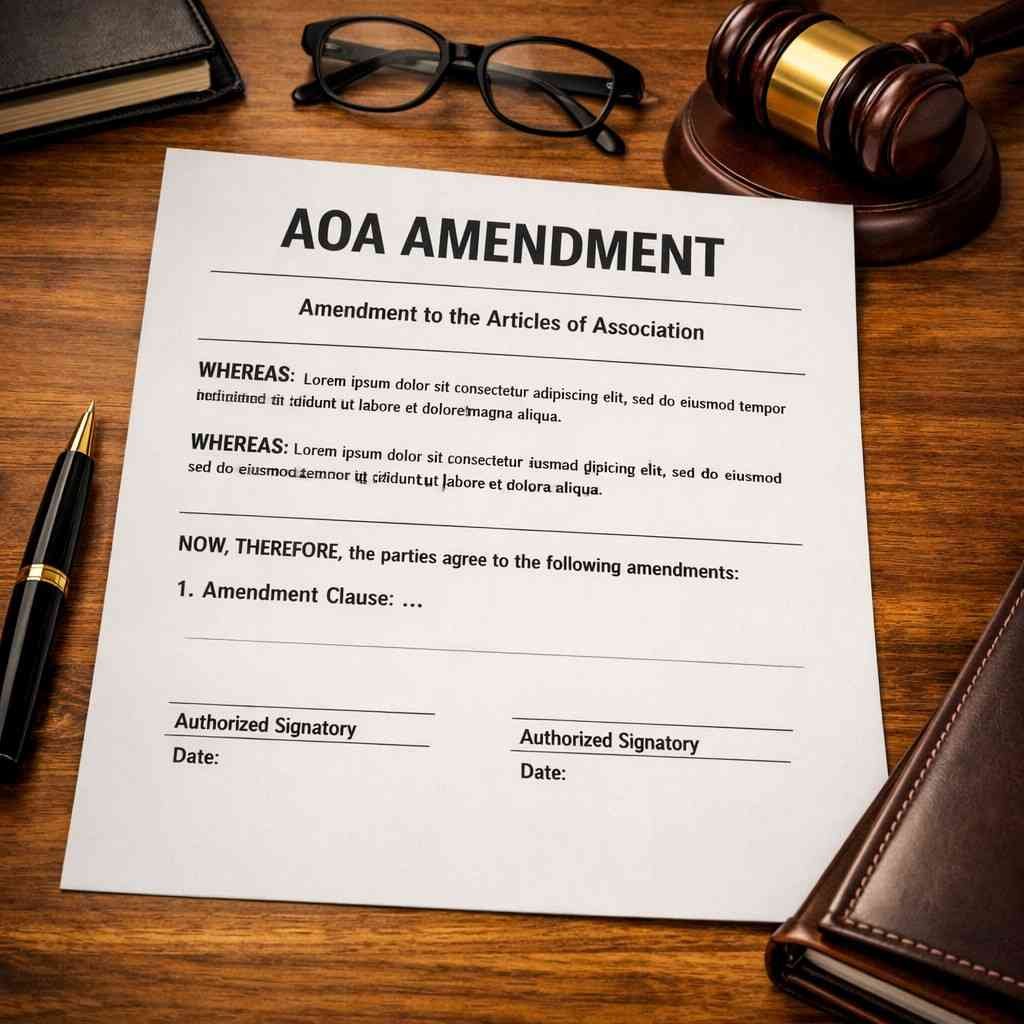
AOA Amendment Services in India
The Articles of Association (AOA) serve as the internal rulebook of a company. They define how the company will be managed and outline the rights, duties, and responsibilities of directors and shareholders. Since business requirements evolve over time, companies may need to modify these rules to remain compliant and operate efficiently.
TAn AOA amendment is the legal process of changing the provisions contained in the Articles of Association after a company has been incorporated. Once the amendment is approved by the shareholders through a special resolution, the company must file the prescribed forms with the Registrar of Companies within the specified timeline.
At TaxAbide, we assist businesses with the complete AOA amendment process, from preparing resolutions to filing the required documents with the Ministry of Corporate Affairs. Our team ensures that every step is handled accurately and in accordance with applicable laws.
Situations Requiring an AOA Amendment
A company may decide to amend its Articles of Association in several situations, including:
Conversion of a Private Company into a Public Company
Conversion of a Public Company into a Private Company
Change in Share Capital
Modification of Shareholder Rights
Introduction of New Share Classes
Change in Board Structure
Change in Business Direction
Regulatory Compliance
Key Requirements for AOA Amendment
Before altering the Articles of Association, companies should ensure the following:
Proposed amendment must comply with the Companies Act, 2013
Changes should not conflict with the Memorandum of Association
Shareholders must approve via Special Resolution
Additional approvals may be required in specific cases
Entrenchment provisions must meet legal conditions if introduced
Procedure for AOA Amendment
Step 1: Conduct a Board Meeting
The Board of Directors should convene a meeting to discuss the proposed amendment.
Approve proposed changes to Articles
Pass resolution recommending amendment
Fix date, time, and venue of General Meeting
Approve notice and explanatory statement
Authorise director/CS for compliances
Step 2: Hold the General Meeting
The company must issue the notice of the General Meeting within the prescribed period.
Shareholders review proposed amendment
Special Resolution is passed
Meeting proceedings are documented
Step 3: File Form MGT-14
After passing the Special Resolution, Form MGT-14 must be filed with the ROC within thirty days.
Certified copy of Special Resolution
Notice of General Meeting with explanatory statement
Copy of amended Articles of Association
Attendance records of meeting
Additional supporting documents (if applicable)
Step 4: Implementation of the Amendment
Once filing is completed, the amended Articles become effective and all company records must be updated accordingly.
Why Choose TaxAbide for AOA Amendment Services?
TaxAbide provides reliable assistance for companies seeking to amend their Articles of Association by handling documentation, drafting resolutions, and ROC filings efficiently.
Our services include:
Expert guidance on legal requirements
Drafting of resolutions and supporting documents
Preparation of revised Articles of Association
Filing of Form MGT-14 with ROC
Continuous support until completion
With TaxAbide, businesses can complete AOA amendment requirements efficiently while ensuring full compliance with corporate regulations.