
Form 16 Meaning: What Is Form 16, Parts, Download & Importance in 2026
Published: August 24, 2026
Last Updated: August 24, 2026
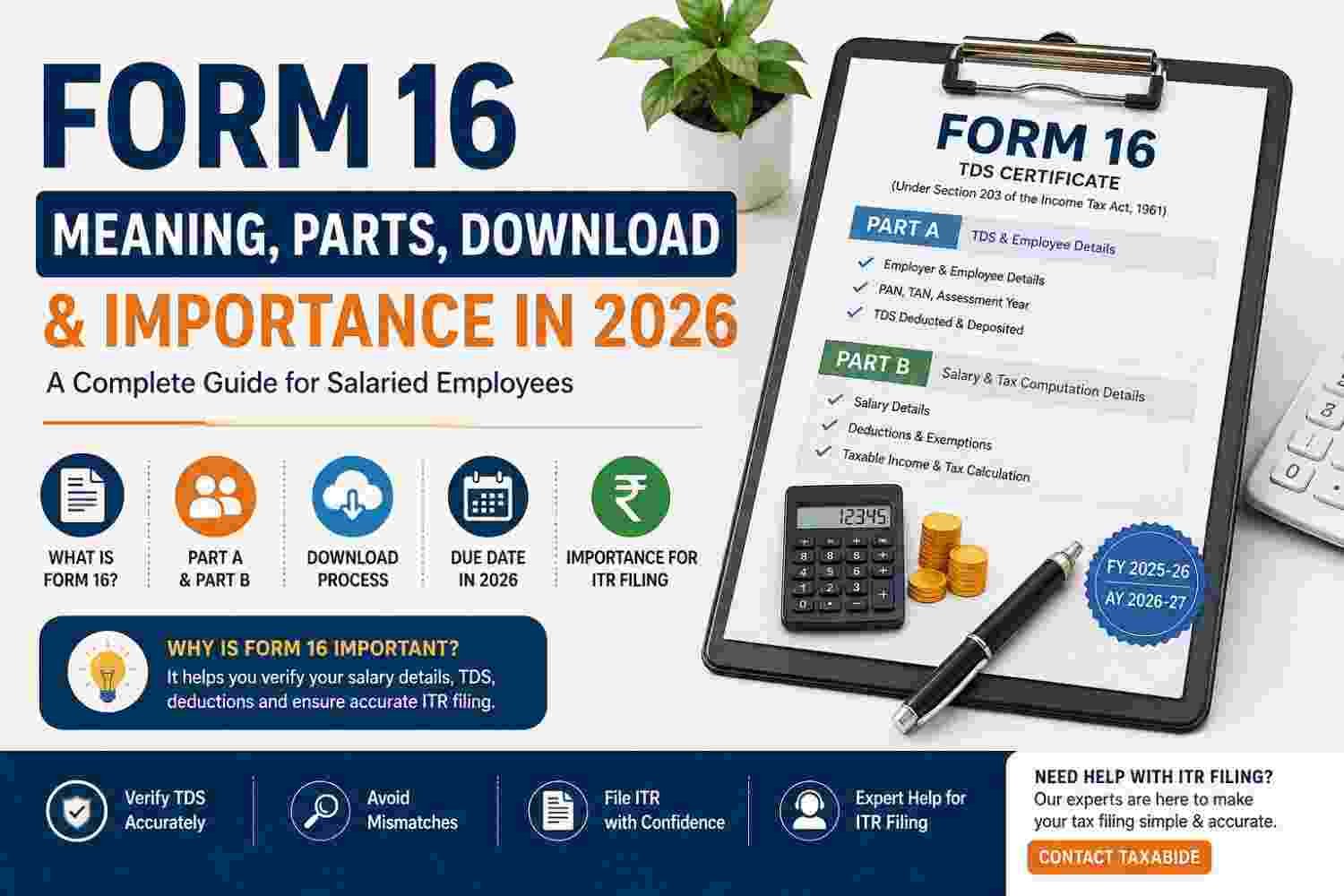
Form 16 is a salary TDS certificate issued by an employer to an employee. It contains important salary, tax deducted and other prescribed information that helps salaried taxpayers review their tax details and prepare an income tax return. Understanding this certificate is useful when checking TDS, preparing an ITR or identifying discrepancies in salary-related tax records.
Quick Answer: What Is Form 16?
Form 16 is a TDS certificate issued by an employer for tax deducted from an employee's salary. It contains important salary and tax-related information that helps salaried taxpayers review their TDS and prepare their income tax return. The Income Tax Department uses the certificate as a source of salary-TDS information while preparing the relevant return. Income Tax Department — Salaried Individuals AY 2026-27
Who Should Read This Guide?
This guide is useful for salaried employees, working professionals, HR and payroll teams, and taxpayers who want to understand the certificate, its parts, issuance, download process, and use during ITR filing.
It is particularly helpful if you:
Changed jobs during the financial year
Want to verify your TDS
Found a difference in tax records
Are preparing an ITR for AY 2026-27
Want to understand salary TDS documents
What Does Form 16 Mean in Income Tax?
In simple terms, it is the salary TDS certificate provided by an employer to an employee.
It can contain important details such as:
Employer and employee information
PAN and TAN
Assessment Year
Period of employment
Salary-related information
Tax deducted and deposited
Applicable deductions and exemptions
The information can then be checked against salary slips and other available tax records before filing an ITR.
For AY 2026-27, the relevant salary information generally relates to FY 2025-26.
Example
Suppose an employer deducts TDS from an employee's salary throughout FY 2025-26.
The employee can use the salary and TDS information provided by the employer while preparing the return for AY 2026-27.
However, don't rely on one document blindly. Always reconcile the figures with your salary records and other available tax information.
Why Is This Certificate Important for Salaried Employees?
It makes it easier for employees to review salary income and TDS before filing their ITR.
For example, you can use it to:
Check salary information reported by your employer
Review tax deducted from salary
Check applicable deductions
Identify a possible TDS mismatch
Prepare salary-related information for your ITR
This check becomes even more important if you changed employers during the year or have additional sources of income.
Who Receives Form 16?
An employee generally receives the certificate from the employer when the applicable salary-TDS requirements are met.
If you worked for more than one employer during the financial year, don't consider only your current employer's information.
For example, if you worked for Employer A from April to September and Employer B from October to March, review the salary and TDS information relating to both employers before filing your return.
When Is Form 16 Issued in 2026?
The salary TDS certificate is generally issued annually after the end of the relevant financial year.
For the applicable salary TDS certificate, the commonly prescribed deadline is May 31 following the financial year.
Therefore, for FY 2025-26, the expected issuance deadline is:
May 31, 2026
If you have not received it, contact your employer's HR, payroll, or finance department.
What Is Part A?
Part A mainly contains TDS-related and identification information.
It can include:
Employer details
Employee details
PAN
TAN
Assessment Year
Employment period
Tax deducted
Tax deposited
Therefore, this section is particularly useful when checking whether your employer has reported the basic TDS information correctly.
What Is Part B?
Part B provides more detailed salary and tax-computation information.
Depending on the applicable details, it can include:
Salary
Exempt allowances
Deductions
Taxable income
Other salary-related information
Tax calculation details
In short, Part A mainly focuses on TDS reporting, while Part B provides broader salary and tax information.
Part A vs Part B: What's the Difference?
What Should You Check Before Using It for ITR?
Before preparing your return, check these details carefully:
PAN: Make sure your PAN is correct.
Employer: Verify the employer information.
Salary: Compare the amount with your salary slips.
TDS: Check the deducted amount against your available tax records.
Deductions: Review the deductions and exemptions shown.
Assessment Year: Confirm that you are using the correct year's information.
If you find a mismatch, contact your employer before filing your ITR rather than ignoring it.
For official tax information, taxpayers should rely on the Income Tax Department and other official government resources rather than unofficial download websites.
Download, Errors, Comparisons & ITR Filing
How to Download Form 16?
Employees generally receive the certificate from their employer rather than downloading it directly through a taxpayer TRACES login. The employer or deductor is responsible for issuing it to the employee.
If you haven't received it, follow these steps:
Contact your HR or payroll department.
Ask when it will be issued.
Keep your salary slips available.
Check your TDS information.
Compare the details before filing your ITR.
Avoid unofficial websites that ask for your PAN or other sensitive information.
Can Employees Download It From TRACES?
No. Employees cannot directly download the certificate through a taxpayer login on TRACES. The deductor issues it to the employee, while employers and deductors have separate TRACES functionality for requesting and downloading it.
Therefore, if you are searching for Form 16 download 2026, remember that employees normally need to obtain the document from their employer.
What If There Is Wrong Information?
Don't manually edit the certificate if you find an error. Instead, contact your employer or payroll department and ask them to verify the information.
Check:
PAN
Salary
TDS
Employer details
Assessment Year
Deductions and exemptions
TRACES states that certificates generated through the TDS CPC system are non-editable. If the underlying TDS statement needs correction, the deductor may need to submit the appropriate correction.
Example
Suppose the certificate shows ₹50,000 as TDS, but your available tax-credit information shows a different amount.
Don't change the certificate yourself. Ask your employer to verify the reported TDS and make the required correction.
Can You File ITR Without Form 16?
Yes, you can file an ITR without physically having Form 16 if you have accurate salary and TDS information.
Before filing, review:
Salary slips
Form 26AS
AIS
Bank records, where relevant
Other applicable tax documents
If the figures don't match, investigate the difference before submitting your return.
Form 16 vs Form 16A: What's the Difference?
Form 16 relates to TDS on salary, while Form 16A relates to TDS on income other than salary.
How Is It Different From Form 26AS?
These are different tax documents.
The employer-issued certificate primarily contains salary-related TDS information, while Form 26AS provides tax-credit information through the income-tax system.
Therefore, comparing the relevant information can help identify a TDS mismatch before filing your ITR.
How Is AIS Different?
AIS stands for Annual Information Statement.
The salary TDS certificate primarily relates to salary and TDS, whereas AIS can contain broader reported financial and tax information.
So, in simple terms:
Salary TDS certificate → Salary and TDS
AIS → Broader reported financial and tax information
Use the relevant records together rather than treating AIS as a replacement.
What If You Changed Jobs During the Year?
If you worked for multiple employers during the financial year, consider the salary and TDS information from all relevant employers.
For example, if you worked for Employer A until September and Employer B from October onward, don't report only Employer B's salary.
Review the information from both employers before filing your return.
Common Mistakes to Avoid
Avoid these mistakes:
Not checking your PAN.
Ignoring TDS differences.
Reporting salary from only one employer.
Using the wrong Assessment Year.
Ignoring deductions or exemptions.
Manually editing the certificate.
Assuming Form 26AS and the salary TDS certificate are identical.
Filing without checking other taxable income.
A short review before filing can help you catch errors early.
How Does It Help With ITR Filing?
The certificate can simplify the salary portion of your ITR preparation.
It helps you review:
Salary income
TDS
Deductions
Exemptions
Employer details
Tax-related calculations
However, it may not contain all your taxable income. Interest income, capital gains, rental income, business income, and other taxable sources may need separate consideration.
ITR Checklist, Professional Help & FAQs
What Should You Check Before Filing Your ITR?
Before submitting your return, review your salary and TDS information carefully. This is especially important if you changed jobs or have income from other sources.
Quick Form 16 Checklist
This simple check can help identify discrepancies before your ITR is submitted.
Is Form 16 Enough for ITR Filing?
No. Form 16 may provide important salary and TDS information, but it does not necessarily cover every source of taxable income.
You may also need to consider:
Bank interest
Rental income
Capital gains
Business or professional income
Other taxable receipts
Therefore, review your complete tax position before filing.
When Should You Consider Professional Tax Assistance?
Professional help can be useful when your tax situation involves multiple employers, TDS mismatches, capital gains, business income, or other complex reporting requirements.
Income Tax Return Filing Services can assist with:
Salary and TDS review
Tax computation
ITR preparation
TDS reconciliation
Filing and verification
Identifying possible discrepancies
Final Takeaway
Form 16 is an important salary-TDS document for salaried taxpayers, but it should not be treated as the only tax record required for ITR filing.
Before filing, verify your salary, TDS, deductions, Assessment Year, and other taxable income. If you find a mismatch, resolve it with your employer or seek professional assistance.
You can learn more about TaxAbide through our About Us page or Contact Us if you need assistance with your return.
Latest Blogs
You may also find these articles helpful: